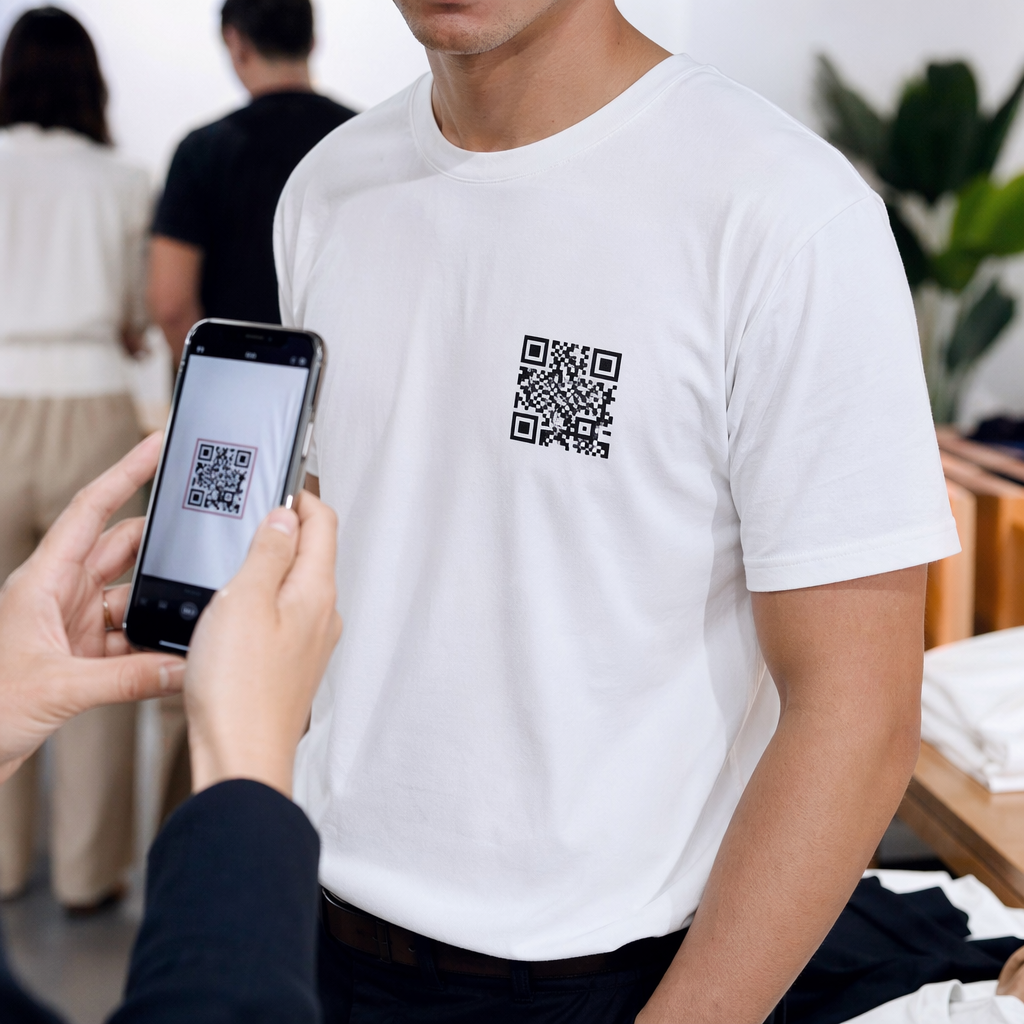
How can businesses transform standard apparel into a high-performance marketing tool? Without proper execution, QR codes on fabric often suffer from distortion or low contrast, leading to a frustrating user experience and lost engagement. This guide provides actionable standards for designing, printing, and placing QR codes on clothing to ensure reliable scannability.
Strategic Use Cases for Interactive Apparel
Integrating technology into fashion allows brands to bridge the gap between physical products and digital experiences. By placing a code on a garment, you turn the wearer into a mobile touchpoint for your brand. This approach is increasingly used by high-end designers and marketing agencies to verify product authenticity or provide exclusive access to brand stories.
- Marketing and Social Growth: Many businesses use link QR codes to direct scanners to Instagram, TikTok, or landing pages. This is particularly effective for staff uniforms at events or promotional giveaways where the goal is to increase follower counts.
- Product Information and Transparency: Digital labels can store far more information than a physical tag. Manufacturers use codes to share care instructions, sustainability certifications, or manufacturing origins without cluttering the garment’s aesthetic.
- Interactive Entertainment: Creative campaigns often use codes for humor or community building. For example, a “Rickroll” QR code that links to a classic music video serves as a low-cost, high-engagement prank that encourages social interaction.
- Inventory and Supply Chain: Beyond consumer-facing uses, codes printed on internal labels help retailers track inventory and manage logistics more efficiently.
Essential Design Standards for Fabric Scannability
Fabric is a challenging medium because it is flexible, porous, and prone to wrinkling. To maintain a high scan rate, you must follow strict design rules that account for these physical limitations.
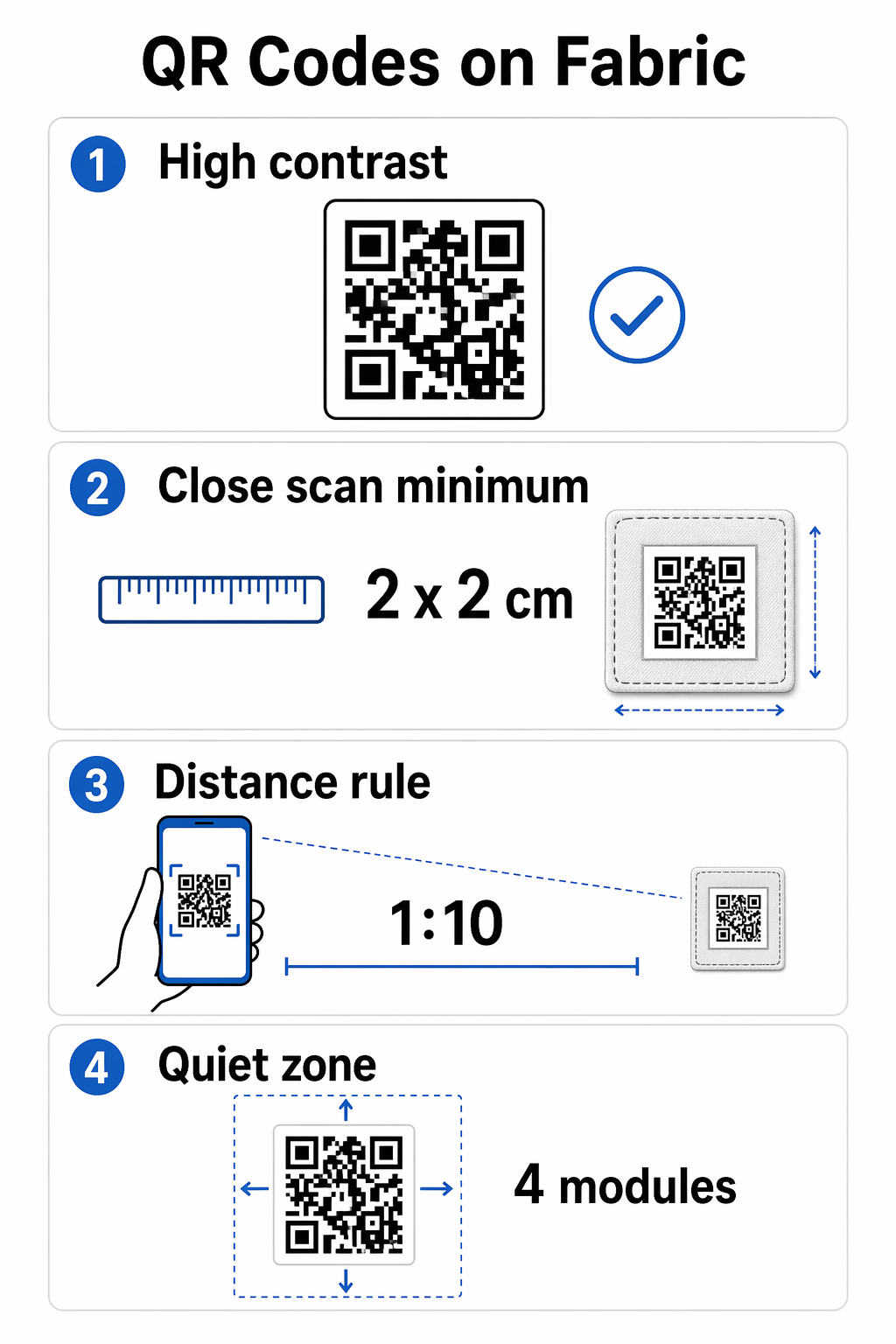
A foundational rule for visibility is maintaining a high QR code color contrast. Scanners rely on the distinction between dark and light modules to decode information. For the most reliable results, stick to a classic black-on-white design. If you must use brand colors, ensure you aim for at least a 4.5:1 contrast ratio.
Size is another critical factor. A printed QR code intended for arm’s-length scanning should be no smaller than 2 x 2 cm, which is approximately 0.8 x 0.8 inches. If the code is expected to be scanned from a distance, such as across a room or at an event, you should follow a 1:10 size-to-distance ratio. For example, if the scanner is 10 feet away, the code should be at least 1 foot wide.
Finally, you must respect the “quiet zone.” This is the empty border surrounding the code that separates it from other design elements or fabric textures. This buffer should be at least four modules wide on all sides to prevent the scanner from becoming confused by nearby patterns or text.
Technical Printing and Material Considerations
The choice of fabric and printing technique directly impacts how well a QR code will function over time. Not all materials are suitable for high-density data patterns.
- Substrate Selection: Smooth, tightly woven textiles like polyester or high-quality cotton are ideal because they provide a stable surface for the ink. Coarse weaves or “hairy” fabrics can cause the edges of the modules to bleed, making the code unreadable.
- Managing Distortion: Avoid placing codes on stretchy fabrics like Lycra or spandex. If the material stretches while the user is trying to scan, the geometry of the code will warp. It is best to place codes on flat, non-stretch areas such as the upper back or the center of the chest.
- Printing Techniques: Methods like Direct-to-Film (DTF) or screen printing offer the sharpness required for QR codes. You can find more detail in this guide to adding QR codes to shirts regarding specific technical workflows.
- Error Correction: When creating your code, use a high error correction level (Level H). This adds redundancy to the data, allowing the code to remain scannable even if up to 30% of it is obscured by a fold, a stain, or minor fading from washing.
Monitor Your Campaign in Real-Time Want to see exactly where and when your customers are scanning your materials? Use the Dynamic QR Code Generator to create trackable codes and access a full performance dashboard today.
Maximizing Engagement with Branded Content
To increase the likelihood of a scan, the code must look trustworthy and professional. A plain black-and-white box may be ignored, but a branded code can increase scan rates significantly.
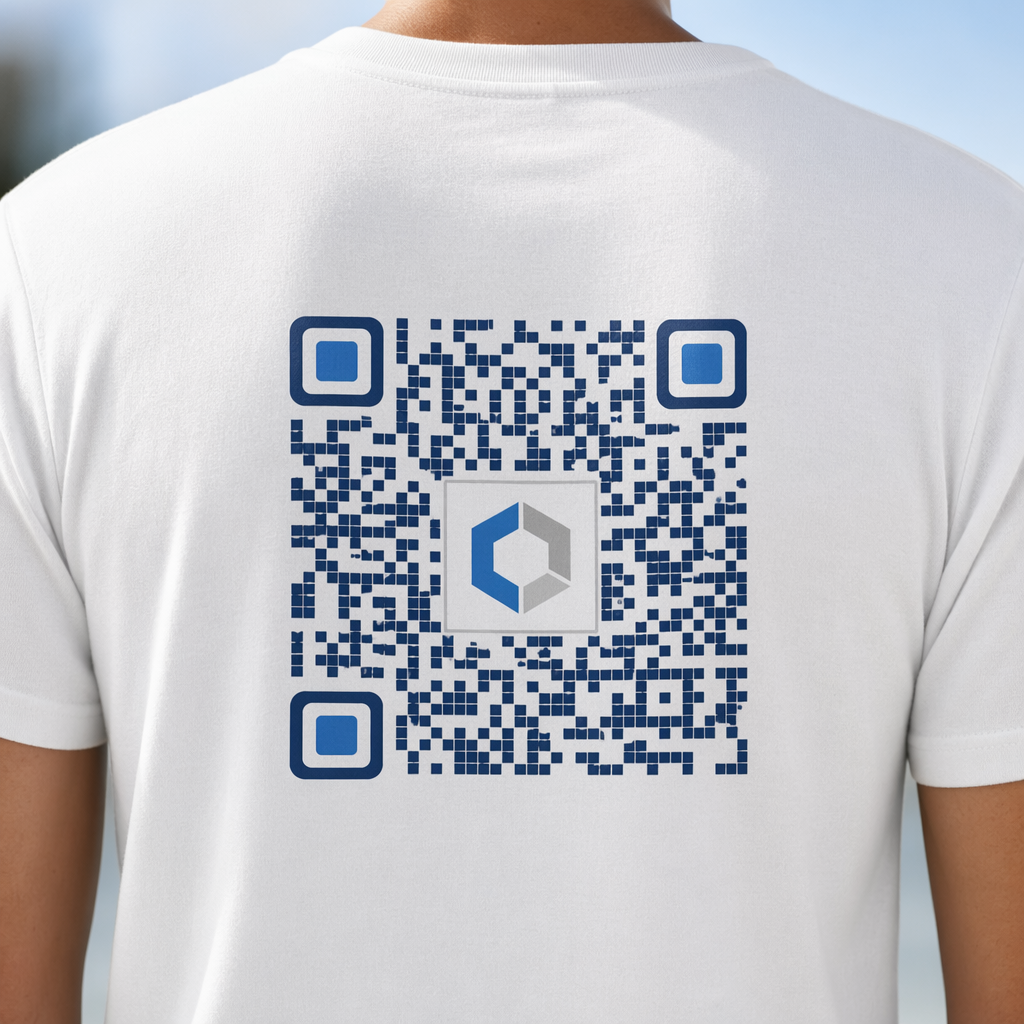
Adding a company logo to the center of the code helps reassure users that the link is safe. When you add logos to QR codes, ensure the logo does not cover more than 25% of the total area and that the corner position markers remain completely unobstructed. This branding serves as a visual “anchor” that connects the digital link to your physical identity.
Using dynamic QR codes is the most effective way to manage apparel campaigns. Because the destination URL is stored on a server rather than hard-coded into the pattern, the QR code remains simple and easy to scan. More importantly, it allows you to update the destination link at any time without reprinting the clothing. This flexibility is essential for seasonal promotions or if a social media handle changes.
Frequently Asked Questions
For arm’s-length scanning, the minimum size is 0.8 x 0.8 inches. However, for better reliability on fabric that may wrinkle, a size of 1.2 to 1.6 inches is recommended.
Yes, if printed using professional techniques like screen printing or high-quality DTF. The durability depends on the ink quality rather than the QR code itself, though using high error correction helps the code stay scannable as it fades.
The best locations are the upper back, the chest, or the sleeve. These areas tend to stay relatively flat and are at a natural height for a person holding a smartphone.